
Most Florida homes are built on concrete slabs, and the plumbing lines often run through or beneath that slab. When one of those pipes starts to leak, the water has nowhere obvious to go, so the damage can build for weeks or months before anyone notices. If you suspect a hidden leak, a licensed Kissimmee plumber can locate it without tearing up your floors. This guide explains why slab leaks happen, the signs to watch for, how professionals find them and the main repair options.
What a Slab Leak Is
A slab leak is a leak in a water supply line, drain line or hot water line that runs under or within the concrete foundation. Because the pipe is buried, you cannot see or hear the problem the way you would with a leaking faucet or a dripping pipe under a sink. Water can escape into the soil beneath the house, rise through cracks in the slab or travel along the pipe to a different location before it appears.
Why Slab Leaks Happen in Central Florida
Several conditions common in the area contribute to pipe failure beneath a home:
- Pipe age and material. Copper lines, widely used for decades, can develop pinhole leaks from corrosion over time. Older galvanized steel is also prone to corrosion from the inside.
- Water chemistry. Some water supplies are more aggressive to metal pipes, and minerals can scale the inside of lines, restricting flow and contributing to wear.
- Soil movement. Florida’s sandy soil can shift or settle, especially after heavy rain, drought or nearby construction, and movement can stress pipes that are embedded in or below the slab.
- Abrasion. Pipes that rub against concrete, gravel or other pipes can wear through as water pressure causes tiny vibrations.
- High water pressure. Pressure above recommended levels strains pipes and fittings.
- Installation defects. Poor workmanship, kinked lines or sharp bends can create weak points that fail years later.
Warning Signs of a Slab Leak
Slab leaks are easy to miss, but they usually leave clues:
- Unexplained high water bills. A sudden increase with no change in usage is one of the most common signs.
- A water meter that keeps moving. If the meter keeps turning when every fixture is off, water is going somewhere.
- Sound of running water. Hearing a hiss or rushing noise when nothing is on can point to a leak in a pressurized line.
- Warm spots on the floor. A hot water line leaking beneath the slab can heat the floor above it.
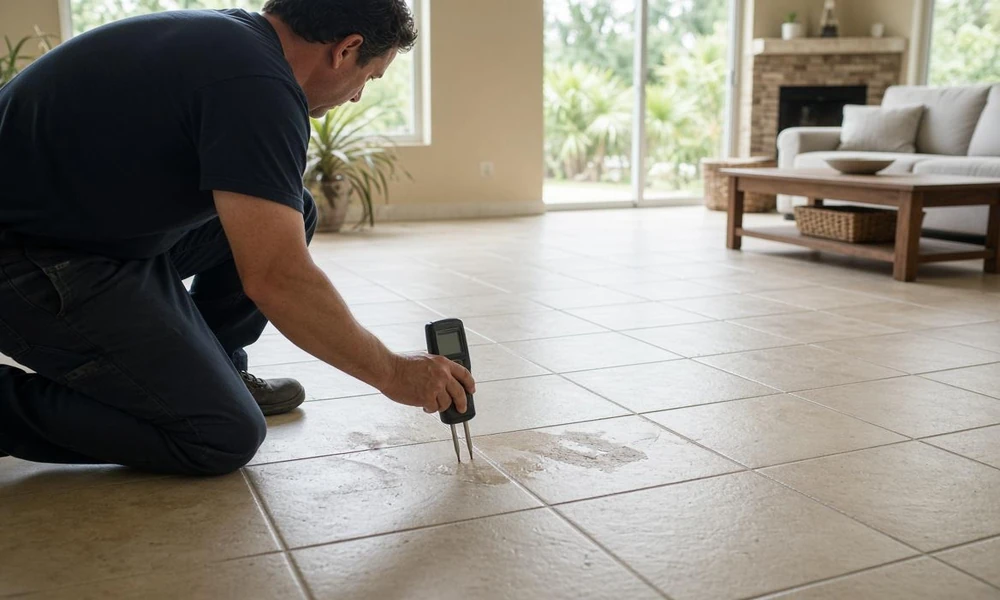
- Damp or discolored flooring. Wet carpet, warped wood or lifted laminate and tile can signal moisture rising from below.
- Cracks in walls or floors. Water can erode the soil beneath the foundation, causing settling or cracking.
- Musty odors or mold. Persistent dampness encourages mold, especially in closets and along baseboards.
- Low water pressure. A leak can reduce pressure at fixtures.
- Water pooling outside. Wet patches on the lawn near the foundation can indicate a leak from a supply line.
A Simple Check You Can Do Yourself
Before calling for help, you can gather useful evidence by checking your water meter:
- Turn off all water use in the home, including the dishwasher, washing machine and ice maker.
- Locate the water meter, usually in a box near the street, and check the leak indicator, which is a small triangle or dial that spins when water is flowing.
- Record the meter reading, wait an hour or two without using water and check again.
- If the reading changes or the indicator is moving, you have a leak somewhere between the meter and the fixtures, though not necessarily under the slab.
The U.S. Environmental Protection Agency’s WaterSense program offers helpful tips on finding and fixing household leaks, including how to check the meter and test toilets with dye tablets, which helps rule out the more common sources before assuming a slab leak.
How Professionals Locate the Leak
Locating a leak under concrete takes specialized equipment, and a good plumber uses non-invasive methods first.
- Pressure testing. Isolating sections of piping and checking whether pressure holds can confirm which line is leaking.
- Acoustic listening devices. Sensitive microphones pick up the sound of water escaping under pressure and help pinpoint the location.
- Thermal imaging. Infrared cameras can detect temperature differences caused by hot water leaks or damp areas.
- Electronic line tracing. Tools trace pipe routes beneath the slab so the leak can be matched to the right line.
- Video inspection. For drain lines, a small camera can be fed through the pipe to see cracks, breaks or root intrusion.
Accurate location matters. It limits how much concrete or flooring has to be opened and keeps the cost of repair under control.
Repair Options
The best method depends on the location, the pipe type, the extent of damage and your home’s layout.
Spot repair (breaking through the slab). The plumber cuts and removes a small section of concrete directly above the leak, repairs or replaces the damaged pipe and patches the slab. This is often the best choice for a single, easily accessed leak, though it involves noise, dust and restoration of flooring afterward.
Rerouting. Instead of repairing the leaking pipe, the plumber installs a new line through the walls or attic and abandons the old one under the slab. Rerouting is often recommended when the pipe has leaked repeatedly or when the leak is in a hard-to-reach spot. It avoids further slab work, though it may require opening walls.
Repiping. If the plumbing is old, corroded or has multiple leaks, replacing all or most of the supply lines can solve the problem for the long term. It is more expensive upfront but can eliminate the risk of recurring failures.
Epoxy pipe lining. A resin-coated liner is pulled or inflated inside the existing pipe to seal leaks from within. It can reduce the amount of excavation needed, but it is not suitable for every situation, and its effectiveness depends on pipe condition and local code acceptance. Ask the plumber about warranties and expected lifespan.
A reputable contractor will explain the pros and cons of each option for your home rather than pushing one solution.
What Repairs Usually Involve
Expect some disruption. Furniture may need to be moved, flooring removed in the work area and water shut off for a period. Ask your plumber about:
- The estimated timeline and when water service will be available
- How dust and debris will be controlled
- Who handles flooring repair or replacement after the work
- Whether permits are required and who will obtain them
- Warranties on both the repair and the materials
Insurance and Slab Leaks
Homeowners’ policies vary in how they treat slab leaks. Some cover the cost of accessing the pipe and repairing resulting damage if the leak is sudden and accidental, while excluding the cost of repairing the pipe itself or damage caused by long-term wear and corrosion. Policies may also have special conditions or exclusions. Contact your insurer early, document the signs and the plumber’s findings, and ask what is covered before work begins. Keeping the plumber’s written report and photographs makes the claim process easier.
Preventing Slab Leaks
You cannot eliminate the risk entirely, but several habits reduce it:
- Check water pressure. A pressure regulator and a gauge can help keep pressure within a safe range, commonly cited as below about 80 psi.
- Watch your water bill. Review it monthly and investigate unexpected increases.
- Check the meter periodically. A quick test every few months can catch leaks early.
- Address plumbing noise. Banging or vibrating pipes may indicate high pressure or loose supports.
- Schedule inspections. If your home is older or has had repeated pipe problems, a plumbing inspection can reveal worn lines before they fail.
- Mind your landscaping. Roots can invade and shift lines, so keep large trees away from pipe routes where possible.
- Know where your shutoff is. Everyone in the household should know how to turn off the main water supply in an emergency.
The Takeaway
A slab leak is one of the most disruptive plumbing problems a Florida homeowner can face, but acting early keeps the damage and the cost down. Watch for the signs, check your meter, call a licensed plumber to pinpoint the leak and compare repair options based on the condition of your plumbing as a whole. Quick action protects your slab, your flooring and your budget.