
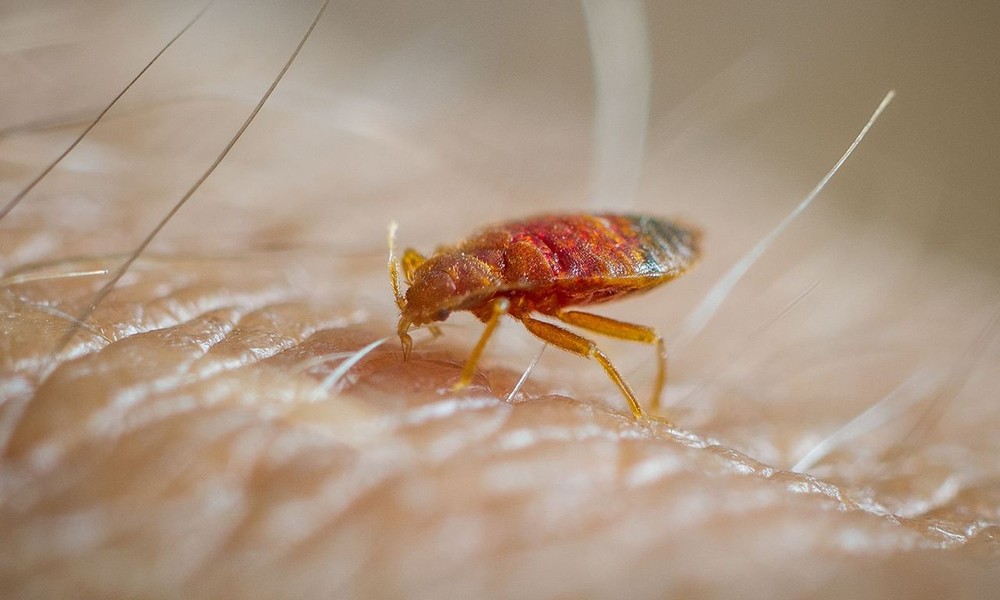

A homeowner in Lakewood calls the third pest control company in eight months. The first treatment, applied in February, used a standard pyrethroid spray with follow-up applications at two weeks and four weeks. By April the bugs were back. The second treatment, in June, switched to a newer chemical class and added desiccant dust in the wall voids. By August the bugs were back again. By the time the family is making the third call, they have spent thousands of dollars, slept on bare mattresses for weeks at a time, and are starting to think they will never sleep in their bedroom normally again. The team at Hot Bugz hears versions of this story every month from Denver Front Range customers who eventually find their way to heat extermination after exhausting the chemical options. The third treatment usually works because it operates on a fundamentally different mechanism, not because the technicians try harder.
Understanding why the first two treatments failed is the most useful diagnostic in the entire bed bug treatment landscape.
Failure Mode One: Pyrethroid Resistance
The single most common reason chemical bed bug treatments fail in 2026 is that the bed bugs are resistant to the chemicals being used.
Research published over the past two decades has documented enormous resistance ratios in field-collected bed bug populations across the United States. The University of Kentucky entomology group, including Alvaro Romero and Michael Potter, published findings as far back as 2007 showing that field-collected bed bugs were tens to thousands of times less susceptible to deltamethrin and lambda-cyhalothrin than the susceptible reference strains used in laboratory studies. Subsequent work by research groups at Virginia Tech, Purdue, and several other universities has confirmed that pyrethroid resistance is now effectively universal in field populations.
The mechanism is well understood. Resistant bed bugs carry kdr (knockdown resistance) mutations in the gene that codes for the voltage-gated sodium channel that pyrethroids target. They also produce elevated levels of cytochrome P450 enzymes that metabolize the pyrethroid molecule before it can do damage. A bed bug with both forms of resistance can shrug off a standard pesticide application that would have killed its grandparents.
What this means in practice is that the first chemical treatment in 2026 is operating against an opponent that has been selected for resistance over the past twenty-five years. The treatment kills the susceptible fraction of the population. The resistant fraction survives, breeds, and reinfests. The “minimum three treatments” protocol is essentially an attempt to overcome this through repeated dosing, and it works inconsistently at best.
Switching to a different chemical class for the second treatment can help, but cross-resistance is increasingly common. Bed bug populations selected by pyrethroids often show partial resistance to neonicotinoids and pyrroles as well.
Failure Mode Two: The Egg Problem
Even a chemical treatment that successfully kills every adult and nymph in the treated space will fail if it does not kill the eggs.
Bed bug eggs are encased in a protective shell that limits chemical penetration. Most over-the-counter and many professional pesticides have limited ovicidal activity, meaning they kill bugs that come into direct contact with the spray but do not penetrate the eggshell to kill the developing nymph inside. The eggs that were present at the time of the initial treatment hatch over the following one to two weeks, producing a new generation of nymphs that the treatment never affected.
The follow-up treatment at two weeks is supposed to catch these emergent nymphs before they reach reproductive maturity. The problem is that emergence is staggered (eggs laid at different times hatch at different times), some eggs are in cracks and crevices the spray never reached, and the nymphs are smaller than adults and easier to miss in any subsequent treatment.
The result is that a chemical protocol can produce a several-week period of apparent eradication followed by a clear rebound when the surviving eggs hatch and the new generation matures and starts breeding.
Heat extermination addresses the egg problem directly because the thermal mortality threshold for eggs (roughly 130.6°F for 99% mortality based on the published research) is achievable in a properly executed whole-room heat treatment that targets a sustained 135°F or higher. There is no chemical-penetration problem because heat is not a chemical.
Failure Mode Three: Coverage Gaps
The third common failure mode is incomplete coverage of the harborages where bed bugs actually live.
Bed bugs do not concentrate in the open areas that are easy to spray. They live in cracks, crevices, joints, screw holes, and voids. The interior of a box spring, the underside of a mattress label, the joint where a headboard meets the wall, the gap between a baseboard and the floor, the cavity behind an electrical outlet cover, the seam inside a couch, the void behind a built-in cabinet – these are the locations that matter, and a perimeter spray treatment reaches very few of them.
A thorough chemical treatment requires the technician to apply pesticide to every harborage, often using crack-and-crevice tips, dust applicators for wall voids, and direct treatment of furniture interiors. The labor required to do this thoroughly across a typical Denver bedroom is substantial, and most chemical treatments are priced and scheduled at a level that does not support that depth of application. The result is a treatment that affects the open surfaces and misses the actual harborages.
Compounding the coverage problem is the bed bug’s own response to chemical exposure. When pesticides are applied imperfectly, surviving bugs disperse to new harborages, often spreading the infestation to areas that were not previously affected. Treatments that drive bugs deeper into walls, into adjacent rooms, or into furniture in other parts of the house make the next treatment harder rather than easier.
Heat extermination solves the coverage problem because the heat penetrates everywhere. The treated space is brought to lethal temperature throughout, and the bugs cannot disperse to a safe harborage because there is no safe harborage. Industrial fans circulate the heated air to ensure that even insulated cavities reach the lethal threshold.
Why the Third Treatment Usually Works
The Denver homeowners who eventually find their way to heat extermination after two failed chemical treatments are not better customers, more careful technicians, or different in any other way that explains the success. They are the same homeowners with the same infestation that survived the previous two attempts. The treatment that finally works does so because it is structurally different.
Heat extermination addresses all three failure modes at once. The thermal mortality mechanism does not depend on any chemical the bugs can detoxify, so resistance is not a factor. The egg threshold is achievable in the same single treatment that kills adults and nymphs. The whole-room heating ensures that every harborage reaches lethal temperature, eliminating the coverage problem.
The treatment runs five to ten hours depending on the size and contents of the space. Target temperatures of 135°F are held throughout, with continuous monitoring at multiple points in the room to confirm that even insulated locations reach the threshold. The customer leaves the space during treatment and returns after the temperature comes back down. There is no chemical residue, no smell, no need to discard furniture, and no follow-up appointment two weeks later.
The single-treatment efficacy is the structural advantage that the chemical approach cannot match.
What Customers Coming From Failed Treatments Should Know
If you have already paid for one or two chemical treatments that did not solve the problem, the framing of the heat treatment conversation is different from the framing of a first-time call.
The first useful step is documenting what was actually done in the previous treatments. The chemical class used, the application sites, the dust products applied, the follow-up treatment dates, and the timeline of when the bugs returned all factor into the inspection and the treatment plan. Some failed chemical treatments leave residual desiccant dust in wall voids that can complicate aspects of the heat treatment process and is worth identifying in advance.
The second is understanding that a heat treatment after a partial chemical treatment may need to address harborages that the prior treatment displaced bugs into. A bedroom-only chemical treatment that pushed bugs into the adjacent living room or hallway closet means the heat treatment may need to cover more area than the original infestation suggested.
The third is the inspection. Hot Bugz will not schedule treatment without first confirming the active infestation through visible evidence. Customers coming from failed chemical treatments sometimes assume the previous company’s diagnosis was correct, but a fresh inspection occasionally reveals that the original problem was misidentified or that the current activity is in a different location than the homeowner expected.
If you are on your second or third bed bug treatment in the Denver Front Range area and the chemicals are not solving the problem, reach out to Hot Bugz to walk through the inspection, the prior treatment history, and the heat extermination process that addresses the specific failure modes the chemical approach is running into.