
A staircase renovation is one of the most visible and value-adding upgrades a homeowner can make, and in the majority of cases a full structural replacement is not necessary to achieve a significant transformation. For most UK homes, the underlying staircase structure is perfectly sound and the right combination of oak tread cladding, new spindles, and updated newel posts will deliver a result that looks completely new.
Understanding the key components and the decisions involved before ordering makes the difference between a renovation that runs smoothly and one that stalls mid project.
The Case for Oak
Oak has been the dominant material for UK staircase joinery for centuries, and its position is built on practical foundations rather than tradition alone. It is one of the hardest domestic hardwoods, resistant to the denting and surface wear that stair treads take from daily foot traffic. Its grain is visually distinctive, ageing with character rather than looking tired over time and crucially for a renovation context, it is available in a consistent range of profiles, grades, and sizes that allow individual components to be sourced and matched across a single project without specialist manufacturing.
American white oak is the most widely stocked species for staircase joinery in the UK, offering a pale, clean grain that suits both traditional and contemporary interiors. A comprehensive range of oak stair parts covering treads, risers, handrails, newel posts, spindles, and capping pieces is available from specialist UK timber suppliers, making it straightforward to source all components in a consistent grade and species for a single renovation project.
Tread Cladding: The Most Cost Effective Transformation
For the majority of UK staircases where the softwood structure is sound, tread and riser cladding is the most cost effective route to an oak staircase finish. Solid oak tread covers, typically 20mm to 22mm thick with a bullnose front edge, are bonded directly over existing softwood treads. Riser covers are applied to the vertical face of each step. The result is visually indistinguishable from a staircase built with solid oak treads from the outset.
The practical requirements before installation are straightforward: existing treads must be flat, structurally sound, and free of carpet and any fixing residues. Tread and riser dimensions should be measured individually rather than assuming uniform sizing, particularly in older properties where variations between steps are common. The added thickness at the top and bottom of the flight needs to be managed with a threshold strip or rebated detail at the point where the cladding meets the floor level.
Spindles and Balustrade
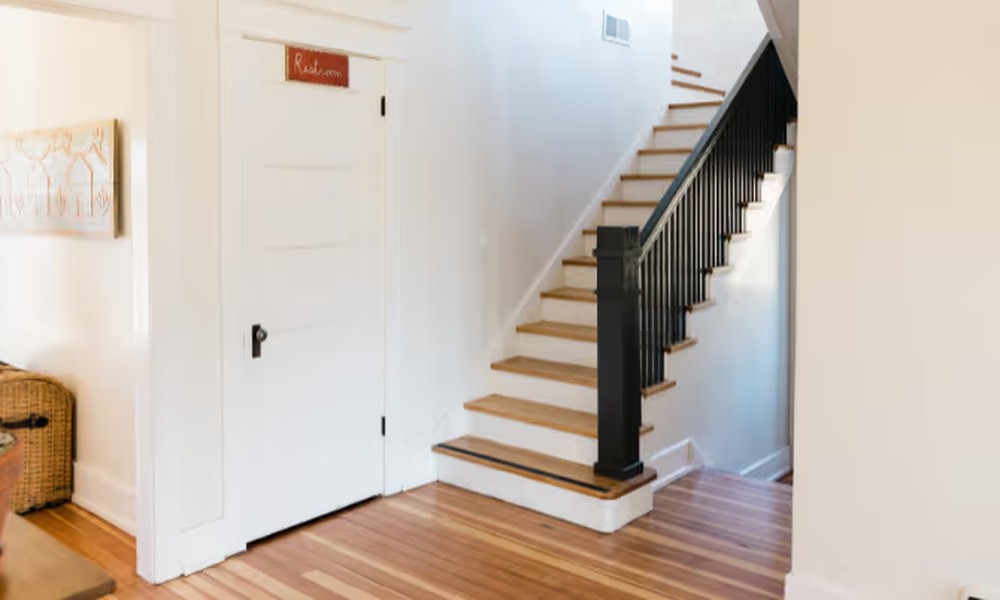
Replacing dated spindles is one of the most impactful single changes in a staircase renovation. The three main profile options in oak are square, stop chamfered, and turned. Square spindles produce a clean, geometric rhythm suited to contemporary and handleless interiors. Stop chamfered offer a subtle detail that works across both modern and transitional settings. Turned spindles with traditional curved profiles are the appropriate choice for period properties and classic interiors.
Spindle spacing must comply with building regulations requiring that a 100mm sphere cannot pass through any gap in the balustrade. This applies to replacement work as well as new installations. Newel posts at the top, bottom, and landing turns anchor the handrail and baserail, and replacing worn or dated posts with solid oak alternatives is one of the higher-impact changes available without structural work.
Matching to Existing Flooring
Where the hallway floor is oak, the relationship between floor finish and stair treads sits in the same sight line and is one of the most important aesthetic decisions in the renovation. Stair treads should be as close as possible in tone and finish to the floor. Ordering samples of both and applying the intended finish before committing to a full order is the most reliable way to confirm compatibility. Viewing samples together in the actual room under its own lighting reveals any tone differences far more clearly than comparing product photographs.
Frequently Asked Questions
Do I need to replace all spindles at the same time?
Replacing all spindles at once is strongly recommended, as matching replacements from different batches at different times can result in subtle variations in tone or dimension that are noticeable on the finished staircase.
What finish should be used on oak stair treads?
A hard-wax oil or floor grade lacquer is needed for the durability that stair treads require; standard furniture oil is not hardwearing enough for the foot traffic a staircase receives.
Can oak cladding be applied over carpeted stairs?
No. All carpet, gripper rods, and tacks must be fully removed and the underlying tread surface checked for flatness and structural integrity before any cladding is applied.
Is oak staircase renovation a DIY project or does it need a professional?
Tread cladding and spindle replacement are within reach of a competent DIY fitter, but newel post replacement and handrail work benefit from a professional joiner to ensure structural connection and compliant balustrading.
Final Thoughts
A staircase renovation with oak is one of the most impactful upgrades available to a UK homeowner, and in most cases it does not require a full structural rebuild to achieve it. Correct material selection, accurate measurement before ordering, grade and species consistency throughout, and proper finishing are what determine the quality of the result.
Sourcing all components from a single specialist in solid oak stair parts and joinery simplifies procurement and reduces the risk of component mismatches arriving on site.